GlobalEdgeTalk Podcast

Is AI Making Enterprise Safer or Scarier? Responsible Implementation & Sales Cycles

Share This Episode

Stephanie Anderson discussing AI's impact on enterprise safety and risks.

Big enterprise customers often feel like the ultimate goal for a young company. They bring massive budgets, brand-name logos, and instant credibility. However, these deals have a challenging side. A single contract can become a slow grind of approvals, internal politics, and resistance to change. This process often drains both time and cash before the work even begins.

Alex Romanovich sits down with Stephanie Anderson to separate enterprise romance from reality. They discuss the true requirements for selling into large organizations and explore why sales cycles stretch into months. Often, the real risk isn’t the product itself, but the high cost of behavior change for the client. Success requires more than just a signed contract. From CRM rollouts to team training, adoption is the hardest part of the process. It is vital to plan for this so your go-to-market strategy remains strong after the deal closes.

Expanding into the United States requires a specific strategy beyond just hiring a large sales team. We dig into building a solid business development structure and running smarter discovery sessions. You will learn how to use partnerships to move faster and more efficiently. The shift to AI in the enterprise brings additional challenges. Stephanie shares insights from her recent AI certification and introduces the ROAD methodology: requirements, operationalizing data, analytics, and deployment.

We also face an uncomfortable question about the future of work. Is AI a threat to institutional knowledge, or a chance to build better systems? We explore how to innovate without breaking what already works. This conversation will help you stress-test your readiness for B2B sales or AI implementation. Subscribe to Global Edge Talk for more insights, share this episode with a founder, and leave a review with your biggest enterprise challenge.

AI presents both opportunities and threats to enterprise safety and readiness, requiring strategic planning, robust methodologies, and strong partnerships to navigate effectively. The discussion highlights the romanticized view of enterprise versus the reality of slow adoption and resistance to change. It emphasizes the need for companies, especially those entering global markets, to assess their readiness, develop clear methodologies like the Johns Hopkins ROAD framework for AI projects, and leverage experienced partners and advisors to overcome challenges and avoid pitfalls. The conversation also delves into the innovation paradox of AI, questioning whether it's a threat to existing roles or a catalyst for new ones, stressing the importance of preserving institutional knowledge.

Toggle Content

Share This Episode

Get exclusive insights

We’ll only send you content that’s relevant and useful.

LinkedIn Newsletter

More from our podcast

Related Episodes

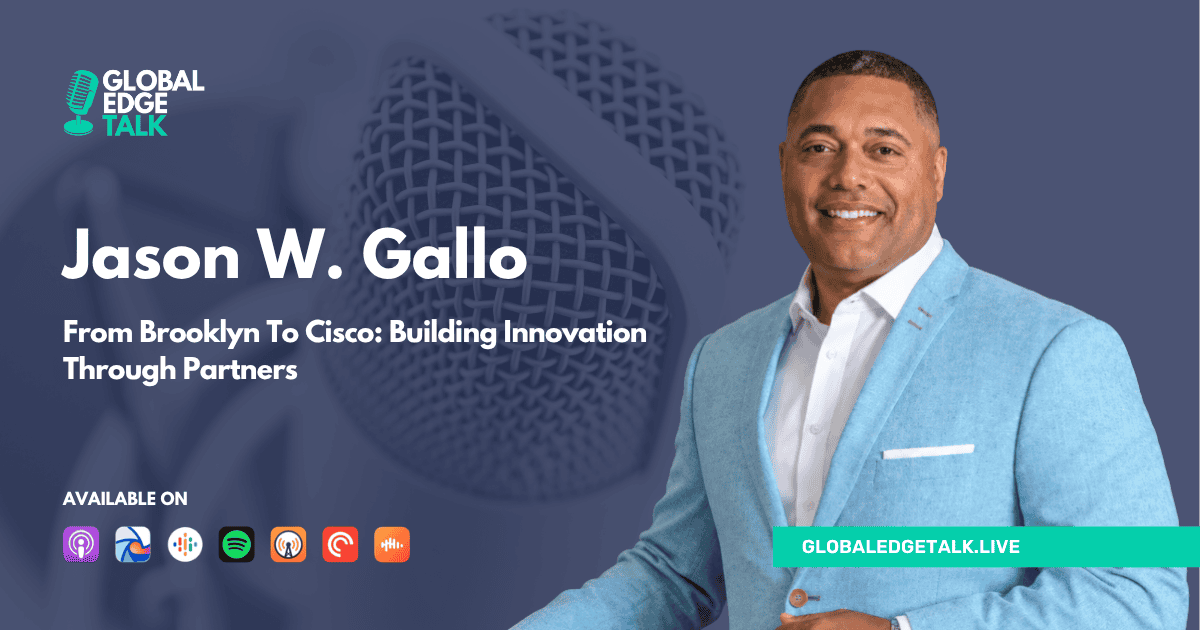
Jason W. Gallo smiling in a blue suit at Global Edge Talk event.

From Brooklyn To Cisco: Building Innovation Through Partners

Building innovation inside a giant company sounds like a contradiction until you hear how it actually gets done. We sit down with Jason W. Gallo, Vice President of Cisco’s Partner Go-to-Market Acceleration, to trace the path from Brooklyn Tech roots and an engineering mindset to leading transformation across one of

Read More »
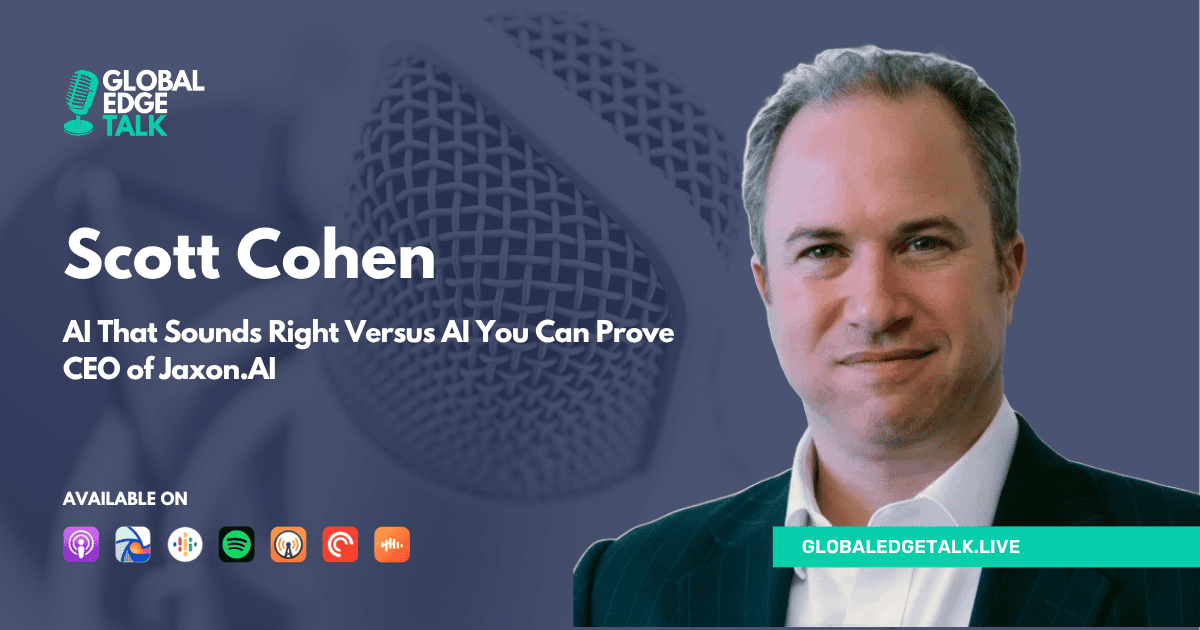
Scott Cohen speaking at Global Edge Talk event.

AI That Sounds Right Versus AI You Can Prove

Scott Cohen founded Jaxon.AI in Boston to build deterministic, mathematically provable AI verification for insurance, financial services, defense, and life sciences. He got there through an Air Force project where the use case had to work—and where the variability of large language models wasn’t sufficient. In this episode: why LLMs

Read More »

Frequently Asked Questions

1 What is the ROAD methodology for responsible AI implementation?

The article introduces the ROAD methodology, a framework discussed by Stephanie Anderson for ensuring responsible AI implementation within large organizations. This methodology aims to guide businesses in integrating AI ethically and safely into their operations.

2 How does AI influence enterprise safety and risk?

The discussion explores the dual nature of AI's impact on enterprises, examining whether it makes them safer or introduces new risks. It addresses critical considerations for business leaders regarding the adoption and management of AI technologies.

3 What insights are offered on US market entry Go-To-Market (GTM) strategies?

Stephanie Anderson provides insights into effective Go-To-Market (GTM) strategies specifically tailored for businesses aiming to enter the US market. The article likely covers approaches to successfully launch and establish a presence in this region.

4 What guidance is provided on enterprise sales cycles?

The article features Stephanie Anderson's perspectives on enterprise sales cycles. It likely offers strategic guidance and insights for navigating and optimizing the often complex and lengthy sales processes characteristic of large organizations.