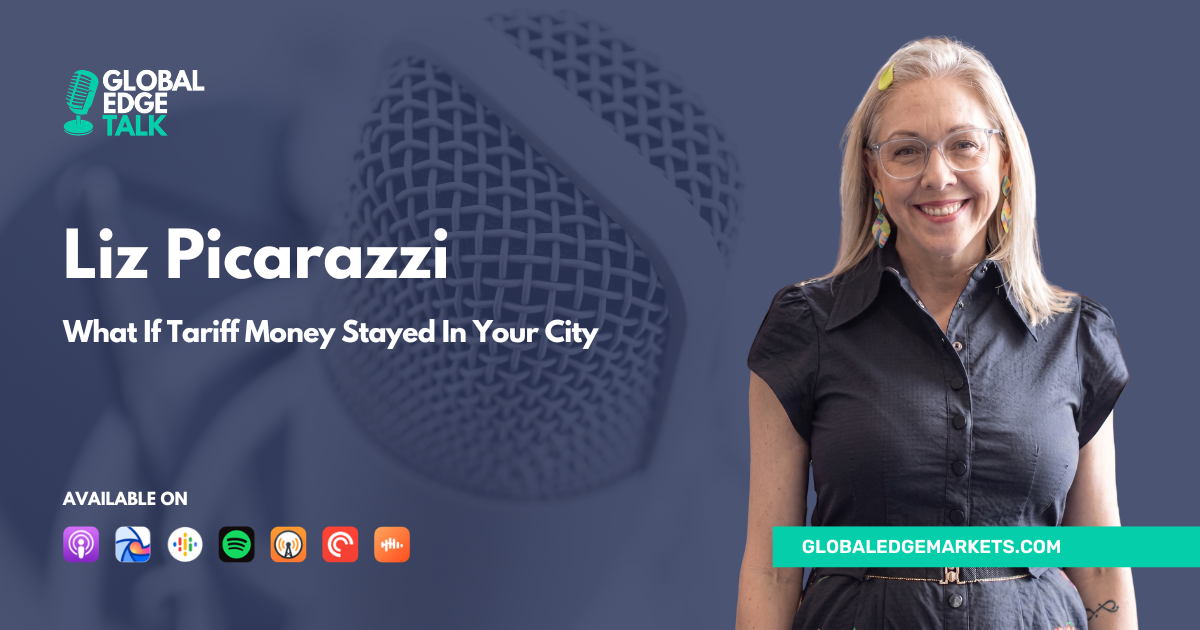
A trash problem on a Brooklyn block turns into a lesson on product design, supply chains, and the real cost of trade policy. We sit down with Liz Picarazzi, founder and CEO of CITIBIN, whose rat-proof, weather-resistant trash and parcel enclosures have become a familiar sight on New York City stoops and are spreading to sidewalks, office plazas, parks, and beyond. What starts with aesthetics quickly becomes a story about public health, containerization, and the hard realities of building durable physical products that people actually need.
From there, the conversation widens to modern manufacturing strategy. Liz walks us through moving from custom builds to modular mass manufacturing, then adapting the product line for new threats like bears by shifting from aluminum to steel. We dig into how a small business evaluates price, quality, and lead time, why “finding the cheapest factory” is the wrong frame, and what a long-term contract manufacturing partner in China and Vietnam can enable when engineering support and reliability matter.
The most urgent section is tariffs and volatility: Section 232 steel and aluminum tariffs, rapid rate changes, and why tariffs function like a tax that hits cash flow at the port with no extension. Liz explains her playbook for risk mitigation: diversify manufacturing across Asia and North America, add US production in Indiana, build a peer community for fast-moving policy moments, and rethink what “reshoring” really requires, including trade education and workforce development. If you care about small business manufacturing, supply chain resilience, and how tariffs affect prices, listen through to the end and then subscribe, share, and leave a review. What would you change first to make American manufacturing easier?
Alex Romanovich
Hi, this is Alex Romanovich and welcome to Global Edge Talk. Today is April 17th, 2026. Our guest is Liz Liz Picarazzi. Hello, Liz.
Liz Picarazzi
Hi, Alex.
Alex Romanovich
It’s so great to catch up with you after so many years and knowing you for so many years. Just to what an incredible opportunity to talk about your success. I’m really anxious to ask you a whole bunch of questions based on what’s going on right now in the United States and globally. Liz is the founder and CEO of a company called Citibin. It’s a Brooklyn-based manufacturer of rat-proof, weather-resistant trash and parcel enclosures that have become a fixture on New York City stoops and increasingly sidewalks, as well as office plazas and not just New York City, but also nationwide, from what I understand. You built your first prototype in 2012 inside of your handyman business called Checklist Home Services. And then you’ve done something really incredible. You spun the Citibin out of its own company in 2016, and 2019 sold the checklist to focus on Citibin. So it was a it was an invention, it was a transaction, it was a lot of all of those things. And one thing too uh important to mention that over the last 18 to 24 months, you have become one of the most visible small business voices in the United States, especially, you know, within the tariff debate and supply chain debate. And you became famous. You stood up the U.S. production in Indiana, you appeared on CNBC, Bloomberg, NPR, and a variety of LinkedIn and Trade Press columns and podcasts. And you really are a promoter of American small, uh, you know, small and medium-sized manufacturing business. You’re whi- one of the very few women in the U.S. manufacturing business. And I’m very happy to talk to you today. So uh welcome to our studio.
Liz Picarazzi
Thank you, Alex. Thanks for inviting me, and it’s been so many years since we worked together.
Alex Romanovich
I know, I know. It’s incredible. So, Liz, let’s start in the beginning. You said that Citibin exists because you live among the trash and the rats in New York City. I mean, I mean, I’m a New York City resident, and you know, it’s a nice way of putting it, an interesting way of putting it, if you will. Take us back to that moment when uh and what did you see on your block in Brooklyn that made you think uh that there was actually a business side of this?
Liz Picarazzi
So I live in New York City, as you said, and rats are among the biggest problems in the city tied to trash, and the lack of containerization of trash is obviously creating a buffet of food for rats to eat every single night. So for me, the original insight actually did not have to do with rats. It had to do with aesthetics. And so you walk around, you see very nice homes in New York, but everybody puts their trash cans in front of their homes because we don’t have garages and driveways and alleys like the rest of the country. And so I realized this is a really sort of a contradictory eyesore to have these trash cans in front of otherwise very lovely homes. And so I realized there was an opportunity here from an aesthetic standpoint, but also public health, public cleansing, cleanliness, and the rat issue. Um, at the time, I was running a handyman company. We did custom carpentry, and I had um a few customers ask for custom trash enclosures. So that was back like 2013, 2014, built, um, started building in my backyard. We moved over to a dedicated fabrication space in the Navy yard. And then I would say sort of the biggest jump in the business came from when moving from custom to mass manufacturing and design it in a way that it was easily modular. If people have three trash cans, they get a three-module. If they have seven, they get a seven module. Some cities go with eight gigantic modules and put them all together. But from the very beginning, really, the insights were about the aesthetics and the public health.
Alex Romanovich
Um, great beginning. Excellent. But and the path that uh led you here is also very interesting. Because before that, uh, you know, you were a part of a checklist home services. It’s a handyman’s business. Um, you, you know, prior to that, you came through um a pretty traditional corporate path, if you will. This is when you and I got together working with uh some of the major brands out there. And um uh it was kind of interesting. It was an interesting experience. So throughout the entire this path, what do you think that really prepared you for um for being a true entrepreneur and creating a product, most importantly, um which is, you know, not only useful, but is also very, very unique.
Liz Picarazzi
Yeah. So I think one of the things that prepared me is just who I am. I’m an I’m very curious person. Most entrepreneurs are very curious. So if they see something that doesn’t see right in the world, instead of just walking past it and thinking there’s ugly trash cans, you know, an entrepreneur will get in their head and they’ll think, how could I do this differently? So for me in the corporate jobs I had before, like I did okay there, but I never would have climbed up because I’m a very curious entrepreneurial person. And those types of people often don’t go very far in corporate. So for me, reaching what probably was the top of my career MBA traditional type of job, I took the leap to entrepreneurship. And part of the way I was able to do that was I was moonlighting my handyman company, which became Checklist Home Services on the side while I was at American Express. So I, you know, had the fixation on handyman services because of my own unmet need. When I bought a house and I needed to renovate it, I had a hard time finding people for sort of lighter home maintenance tasks like hanging shelves or mounting a TV, painting a nursery, assembling a crib, any of these things that people really need someone to help with, but you don’t really have the time or the energy to find many contractors to do all of those things. So checklist home services also came from my own need and my own household to essentially find a handyman for a day, which is sort of the productized service that we offer. And, you know, it came from inherently being an entrepreneur, having the curiosity and noticing unmet needs that I had an impulse to try to fix.
Alex Romanovich
Great story. And I’m a I’m a strong believer into a method to product type of a path. As a matter of fact, we even, you know, Jem even has a productization service and uh practice. And I I love the story. I love the fact that you recognize the value of taking services, productizing services, and building methods into product. And the it not, you know, some people will say, well, you know, aluminum can. What what what’s a big deal, right? But it’s a very pr, you know, it’s a very specific product. From what I understand, it’s a powder-coated aluminum enclosure for the main line. It’s rat proof. That means that I guess they cannot, you know, bite through it or whatever. It’s built to last, and you even have variations of it with uh a steel uh uh option uh that you call grisbin, and that’s for the bear country. I guess it’s not just for New York City, it’s also for the uh for the folks that have to deal, you know, like Pennsylvania, and you know, I used to have a put place in Pennsylvania. We used to have uh black bears over there and brown bears. So very, very appropriate.
Liz Picarazzi
Yeah. Well, and that also came from you know the gris bin, which are bear-resistant version, is that once we became somewhat famous for our rat-proof enclosures in New York, and people in other parts of the country that have bear issues heard about City Bin, they contacted us and said, Do you have a bear version? And we didn’t. And so we needed to adapt the product. The biggest change is shifting from aluminum to steel because bears can get into aluminum. They’re very smart, they are able to detect weakness in any material that you build with. And so that was something that I would say, you know what, that wasn’t my idea. That was my prospective customer’s idea. And they bring it to our attention and we say, how can we solve for that? And that’s how we’ve been able to create the different product lines. It started with homes and then it moved to cities and parks and then to bears.
Alex Romanovich
Incredible story. I’m I’m assuming raccoons as well, right? Yes, yes. That’s worked. Uh yeah, but but um that story that in 2015 to 2017 that takes you to China. And uh, you know, as many manufacturers at that time in the United States, uh exploring, you know, Chinese option, if you will, you did the same thing, right? Tell me about this experience. Tell me what um at that time what was the impetus, so to speak, to do so? Was it just cost? Was it other factors? And how did you uh, you know, were you phased at all with the made in China type of a label, if you will, that you were gonna have on your product?
Liz Picarazzi
So that’s such a good question. And I like to be able to talk about it because I don’t think most people understand the thought process that a manufacturer goes through in order to make such a big decision to offshore. So for us, we started and we did custom for a couple of years. Then the market demand was such that we realized we wanted to mass manufacture. So we essentially redesigned it to be a ready-to-assemble kit. And we started manufacturing in two US states. And we did that for a couple of years and found that, believe it or not, for price, quality, and time, which are the three things that you usually get only one of when you’re in services. I wasn’t getting any of them. And right around the time I probably was about to throw in the towel, I’m in an entrepreneur organization called EO, entrepreneurs. It’s a worldwide organization. And at a social event, I met someone whose family started a contract manufacturing company in Taiwan 50 years ago and met them here in the U.S. They live here now, and they basically heard my difficulty with U.S. manufacturing. I won’t say all US manufacturing, but the factories I tried to work with and said, come take a look, come visit our main office is in Shanghai. We can set you up to visit some factories, give us some drawings, obviously, signed NDAs, and about two weeks later, I was on a plane to Shanghai. And the motivation was that I needed the right price, I needed it to not take too long, and I needed the quality that I really wanted. And so those were the three criteria. And the feeling of am I outsourcing this to China? And I don’t know, say like a shame in that was much lower than the feeling as an entrepreneur of I want my product made. And I don’t care where it’s made. As long as I can afford it, it’s the right timing and I get the quality I want. So I shifted some of my production to China to see if I would get those things. And I did. And I have been in Asia now for eight years, both in China and Vietnam. I’ve been with the same company the whole time. So I have an agent that’s sort of the intermediary between myself and my factories. And that’s also been sort of a factor in the success because that introduction I got through EO led me to an incredible contract manufacturer that has done a great job, not only with those things I wanted, but also in innovating and expanding the product line. So I guess what I would say is I’ve sort of gone over the shame because I’ve built a really great business that otherwise would not exist if the economics hadn’t worked. It enabled me to start getting paid. It enabled me to hire my husband as a COO and to have our entire household income based on the business. And um, it’s been really good. I’m not a manufacturer that’s looking for the cheapest price. I’m looking for the most reliable partner. And that’s not something that Americans understand typically either. I’m not an American that is just going factory to factory to find the cheapest price. There are some manufacturers that do it. For me, I was looking for a long-term partner that I could grow with that believed in the product, would help me with engineering and design and support, all of which they did. So my experience has been really good, but I’m one person and I may just have had the best introduction my business could have ever gotten by being in a professional organization where I met this person that led me to the factory that now has helped so much in our development.
Alex Romanovich
Great story. Great story. The continuation of this story is even more interesting. So let’s fast forward to today, or this year, I should say. And this is the part of a story that puts you in front of Bloomberg, MBC, NPR, and a variety of other media outlets. You’ve written uh that your tariff rate has changed five times in eight years, and you started at roughly seven and a half, eight percent. Take us through the trajectory and when the rate changed since the time you started City BIN and what it is today.
Liz Picarazzi
Sure. So when I first started, I was at like 77.5%. And then the Section 232 tariffs, which are about assigning tariffs to industries that are viewed as potentially like economic vul vulnerabilities or threats from foreign like manufacturers to US. So that during the first c the first Trump administration um put us up to 25% for a while. But then that was actually lowered back to 7.5%. So in the first Trump administration, I was at by the end of it, 7.5%. And then throughout the whole Biden administration, I stayed at that 7.5%. But then even before Trump was elected, Biden and then Harris both spoke about raising the tariff to 25%. So I saw that that, the writing on the wall, that was going to happen regardless of who was in the White House. And then that initiated our search to move production from China to Vietnam. And so shortly after Trump was elected for the second time, I knew for absolute sure that I had to get to Vietnam. I had started it before, but I threw gasoline on it and accelerated it and moved to Vietnam. But I was able to move with the company I’ve been with for eight years because they smartly set up a satellite office in Ho Chi Minh City during the first Trump administration and were able to bring a lot of clients over from China to Vietnam. So back to the tariffs. So then shortly after he was elected, the tariff went up to 25%, which was awful. And then there were the reciprocal tariffs that we were really threatened by at first, but then those are actually not included in the steel and aluminum tariffs, which meant I was exempt from the reciprocal tariffs that were announced on Liberation Day on April 3rd last year. And I was just paying the section 232, which is 25%. But then Trump increased that to 50% in June. And that was moving to Vietnam did not help me at that point because the tariff is on aluminum and steel, regardless of the country of origin. So I was really only saving a little bit by me being in Vietnam. In China, I was still paying the fentanyl tariff, which was 10%. So China was a little bit more, but still moved most of it over to Vietnam. And then in the fall, there was a threat of 100% tariff across the board, which would have, for me, would have been 100 plus. I was already paying, but then that was changed again. So I didn’t have to pay that 100% plus tariff. While those in the reciprocal category did, many of them had to pay that up to like 150%. Like I have manufacturer friends who literally abandoned containers on the ocean because their tariff bill was would have been so much more than when the container hit the water. So there’s sort of a trend of either redirecting containers to another country like the Philippines, which has a big industry around this now, or abandoning containers entirely. I did not need to do that. I had to raise my prices, obviously. I was at the 50% tariff. We we we actually didn’t raise prices, we did a tariff surcharge, which is sort of across the board and is easier to turn on and off. That was sort of a price.
Alex Romanovich
So it is a true statement that the American consumer does pay the tariff, right? They do.
Liz Picarazzi
Yeah. The American consumer pays the tariff. You don’t always know where. For us, it was very transparent. So then if we go back to the tariff story just two weeks ago, my tariff luckily went from 50 to 25% because of the Section 232 adjustment. And for me, I mean, my my product is 90% metal. So for me, it was just all great, 50 to 25%. But for some people who are, let’s say, are only 20% metal, then they had to jump up to 25%. So that’s the only time I’ve ever been glad that my product is 90% metal because it sort of made me feel good that I’m obviously always going to be in that metal category. And I’ve shifted from 50 to 25%. But then the next chapter in this is that I’m also manufacturing in Indiana. And that was in response to this chaos. Um we’re working in sort of small production orders with them. Um we did an RFP to about six different um metal fabricators in the US after the, again, I’ll say in quotes Liberation Day in April of 2025. And there was one company that just really outperformed the others. They’re in Indiana. And so now, in terms of pricing, I’m still working through this, but I really need to have sort of a blended rate between what I’m paying in Asia and what I’m paying in North America because they can change any which way. I don’t want to keep changing my pricing. I want to sort of figure, like for now and forever, I’m always going to be manufacturing in Asia and North America. So my pricing cannot be where is this batch manufactured? It means across the whole product line. How do I make sure? And you know, for me as a small business, that’s really confusing for big companies, automakers. They blend the rates from every component that they get. And it’s not like you see a price for Asia or price for the US. That’s something I need to evolve into because it also depends on the proportion of US versus Asia, and it depends on the changing tariff rates.
Alex Romanovich
So you you mentioned something. Let’s zoom in on the Indiana situation. You mentioned that in one of the interviews, I believe, and the public coverage that you had, that you would love to manufacture in the United States, but you not necessarily can’t. Or you in many cases you can’t. And the reality is even more interesting because uh roughly 10% of your production is running in the United States and Indiana today. And you are turning US on, which is great. But tell me more about why it is that manufacturers like yourself can’t manufacture in the United States in many cases.
Liz Picarazzi
I mean, the the price of labor is so much higher in the US than it is in Asia. There’s no getting around it. I mean, as an American, I want everyone to be paid as much as they can, but the price of labor is just so much higher. The other thing is that the factories that I’m using actually use more manual processes with equipment that they’ve entirely paid for. And so they’re not amortizing the cost of their machinery to me, like in the US. So the factories I toured in the US were very more high-tech, more automated, not as manual. And they have to put those fees on their customers. And that was so it’s labor and the cost of machinery, really, I think is the difference. But the other part of it is just the workforce. So there’s not a lot of stuff manufactured in the US anymore. And part of it is that this country has not been investing in the manufacturing sector, not investing in trade education. You know, in my lifetime, if you went to trade school, it was usually because you sort of ended up there. Like you may not have had enough, good enough grades to go to a regular four-year college. There’s a stigma against trade education. There’s not a stigma against working in the trades in most countries in the world. And like Germany, for example, they have great trade education and they have a lot of pride in their engineering and their manufacturing. Most German people I’ve worked with as I’ve been a manufacturer have a really balanced skill set of sort of the white collar and the blue collar. And it’s rare to find Americans that have that blend. That’s another reason why a lot of my employees are not American. A lot of my employees are actually from Venezuela, which is a lot in the news. That’s a whole separate thing. But part of the reason. Why they do well in my company is that I can have a salesperson who also is an installer because in high school, or from their father or grandfather, they were taught how to use tools and how to build things and how to fix things. And they may also have a four-year education. And so that blend, it hurts Americans that we don’t train people, men and women, to have some sort of manual technical skills. Um, you know, a lot of Americans don’t even own a drill. They don’t know how to do things. In other countries, they do. And so with Asia, there’s there’s no lack of laborers to build my product. In the US, unfortunately, there is both in terms of the number of factories and the number of workers.
Alex Romanovich
Um, yeah, my goodness, you’re you’re you’re so right about this. I work with a lot of European and Asian uh companies as well, and and it’s incredible to see the differences between our inflection points, our concentration, our focus over the last uh, I would say 20 years, right? I mean, I remember my high school back in Brooklyn, where I was taking drafting classes and labs and and so forth. There was actually, you know, the trade education in high school at that time was mandatory. Yeah. And all of a sudden something just switched. And we we we got into uh you know liberal arts, and you know, nothing wrong with that, of course. But um I remember at that time the trade schools were advertising everywhere in subways, you know, video, you know, television everywhere. And all of a sudden there’s just poof, one day it just disappeared. Yeah. And I’m hoping it’s coming back again, but I’m just wondering if it’s too late.
Liz Picarazzi
Well, see, my future business I will share here is probably gonna be a trade school, actually. It’s way off on the future, but as an entrepreneur, I think what is my next thing that I really care about? And as an American and as a manufacturer, I want to be a part of revitalizing American manufacturing, even if it’s in a small way. So, you know, there probably will be more investment in trade education. Like that is maybe one thing that might come out of this administration. I haven’t really seen it yet, but it would make sense for them to invest in trade education if the tariffs are are supposed to help our manufacturing industries. So yeah, it’s different. And then back to my own high school, I took uh typing class, which a few years after that were replaced with computers, and we all know where that went. So, you know, trade education, taking typewriter typing classes, that’s it wasn’t a thing for a long time.
Alex Romanovich
Absolutely. Absolutely. I mean, I used to take typing classes as well in high school. That’s why I can type uh 60 words a minute on my keyboard. But of course, all of that is yeah, because all of that is, I mean, that was useful for a few years, all of that is now being replaced by voice and artificial intelligence and so forth and so on. But let me ask you something. If there was a playbook for a small manufacturer in the United States who is probably dreading a call from the uh freight forwarder or uh another um you know, another reaction from the White House uh to what’s going on in the world right now or or what have you. What would that playbook look like? The top three items, right? How should they prepare? What should they think of how should they anticipate or mitigate the risk, if you will? What should they do?
Liz Picarazzi
So I think the biggest best thing to mitigate the risk is to manufacture in Asia and in North America. Because 10 years from now, things probably won’t be so unstable, but they always could be in the future, administration to administration. So just like a stock portfolio where you diversify your risk, I’ve done that with manufacturing. And it’s something where you really need to look into it, even if you don’t go down that path. But it’s it’s risky to have one vendor for anything. And I’m lucky that I have had a great vendor in Asia for all this time. But if I hadn’t, my whole Asia experiment could have failed and the whole company might have failed because I already knew that it was hard to do it in the US. So having a plan to diversify your manufacturing across continents and even within, like in North America, like I have Indiana, but I’m also looking into another state right now for a different product line. So our Grisbon product is primarily sold in the West. It would make sense logistically to have my manufacturing and my fulfillment done there. So right now, our warehouse is in Brooklyn, but with the Grisbon as that grows, we know that we’re gonna have a DC in the West. And that’s the sort of like you just don’t want to have all your eggs in one basket. You never know what is gonna happen. Another thing I would say is you need to have a community of peers that it is going through this. So for me, a group like EO, I know global manufacturers that are all dealing with tariffs from all sides of it. And we’re on WhatsApp, and through all this confusion, it’s actually sort of become a tariff support group where people that are facing a quick switch, I mean, which happens like, I don’t know, at first it was happening like every couple of weeks, and now it’s a little more stable. But right now, with people that are trying to get their refunds, there’s still confusion about that too. So I would say if your question is how can you sort of deal with it, you need to have a community of peers that’s going through it. Some of them are probably paying for lawyers and consultants. You can get advice from them, see what they’re hearing, um, especially when things are moving so quickly. You know, like a lot of the tariff announcements I’ve noticed happen on Friday nights after the market closes, and then you have the whole weekend to freak out about it. Well, I don’t have to freak out on my own. When the hundred percent tariff was and the 50% were announced on Friday nights, throughout the weekend I could talk to peers to see what they were going to do about it.
Alex Romanovich
Let’s talk about apologies and be apologetic. Um, I mean, American manufacturers simply cannot disconnect Asia, simply cannot disconnect China. But I I see through, you know, throughout the um the media and press and so forth that that is being almost, you know, put to shame or or something like that. I mean, that movement is kind of there. Should American manufacturers, especially small, medium-sized ones, be apologetic about doing business in Asia?
Liz Picarazzi
I mean, that’s really like personality-based. As a business person, you need to do what keeps your business going. And for me, my business is like my child. So if I need to move manufacturing to Asia to protect my child and to protect my paycheck and my husband’s paycheck, I’m gonna do it. So when I tell people everyone everyone can understand what it’s like to suddenly get no paycheck or to get a lower paycheck. And everyone also understands, as taxpayers, how would it feel if your income tax changed from 7.5% to 52.5% in two weeks with two weeks’ notice? Can you imagine finding out on April 1st that your 30% rate was going to 75%? Would anybody put up with that? They wouldn’t. But you’re only going to feel it right now if you’re a manufacturer and that jump is so high. So I sometimes explain it to people that way. A tariff is a tax. A tariff is a tax. In the US, when we pay an income tax, at least we know we’re getting something for it. We get roads, we get schools, we get all manner of protection. If I’m paying a tariff, I’m not getting anything. Like I’m not even getting $100 in my community for the $400,000 I spent in tariffs last year. And I’m probably going to spend just as much this year. So being apologetic, I mean, obviously I’m really opinionated on it, but people as taxpayers, if you think about it from that perspective, they will empathize with how it would feel to have your tax rate jacked up so much with absolutely no notice. And I’ll tell you, it’s even worse than that. And I’ll tell you why. At least you can um at least you can delay or get a um an extension on your income taxes. I can’t get an extension on my tariff rate. I can’t get my product in the Port of Elizabeth until I’ve paid the tax. The tariff, I can’t extend that. I could get some predatory finance person to pay for it. Luckily, I haven’t been able to do it, but you don’t get an extension like you do as a taxpayer. So it’s even worse. The rate hike and the ability to pay is cut off with the way they’re doing it.
Alex Romanovich
What a great analogy. It’s so it’s so very much true that you really have no control over it. And you basically aren’t, you know, you you are on your own with this one. You had a great, you shared something with me earlier, and you said, you know, wouldn’t it be great if uh at least you could divert, you had you at least you had a decision to say, by paying this tariff, some of that uh, you know, some of that uh money will go back to your local community. Tell us about that idea and how would you implement that?
Liz Picarazzi
So I wrote a LinkedIn piece back in November that’s the title was Please Garnish My Tariffs. No one wants anything garnished, but I’m actually asking for it. I’m asking for someone, the state or the city, to step in and say to the Treasury, say to Trump administration, we want to keep X percent back in the state of New York, the city of New York, the community of Brooklyn. Garnish it. Like do something. That can’t all disappear into the Treasury. The billions of dollars that people have paid, we get no benefit as taxpayers. That is a tax that’s back into our community. So I would say how it would be implemented, I’ll let the policymakers figure that out. And I honestly don’t see them doing it. We’ll see, although Governor Hokel in New York is suing the government right now for the tariffs, partly on behalf of consumers, a little bit on behalf of businesses. But what if she were to say, let’s hold 10% of it? Let’s try to intercept that money somehow, whether it be legal or through some other means, and say, we’re gonna take this money and we’re gonna put it back into the revitalization of industry and manufacturing in New York. You know, I’m in an industrial business zone in Brooklyn at Industry City. It’s zoned for manufacturing, but yet I don’t manufacture there. What if some of that money could come back and I could reshore some of it? So, I mean, I don’t think it’s like a crazy idea. And I don’t care if it’s a crazy idea. I don’t. I think more manufacturers need to be saying it. What are we getting for this? Reinvesting it in the things that they say are the reasons for the tariffs.
Alex Romanovich
Liz, as an entrepreneur, what would be your advice to young entrepreneurs who are trying to make their business in manufacturing, who are trying to deal with tariff situation, which is totally unpredictable, and who are trying to become a voice, so to speak, right? And because, you know, I mean, hopefully when uh there are too many loud voices, uh maybe somebody will hear that. What would be your advice?
Liz Picarazzi
So this is an advice I give to all potential entrepreneurs, regardless of industry, and that’s make sure there’s a customer need. Don’t build something, manufacture something in a speculative way. Only go into manufacturing it if you really solidly know. So it’s okay to prototype, like learning, putting it out there, getting beta testers, but don’t put in any sort of major production order or go down that path unless you absolutely know there’s a customer need. Because it’s expensive if you have, you know, high quantities and you’re in a warehouse situation, you’re gonna be paying for rent on that as well. That really is my main advice. And again, it doesn’t have specifically to do with manufacturing, but even if you’re you know in the dining industry, just because you like to cook doesn’t mean you should start a restaurant. There may not be a big enough audience for what you want to do. And then you get a rent and you hire people and you come up with all your marketing expenses, and then no one comes to your restaurant. So test it out in ways that are inexpensive before you scale something up.
Alex Romanovich
Great advice. Liz, thank you so much for being with us. It’s been a privilege to talk to you. I can see now why Bloomberg, NBC, and NPR were so interested in this story. Congratulations on that. And congratulations and uh best of luck to City Bin. Knowing you, I know it’s gonna be even a bigger success than what it is right now. And let’s hope that the situation between the two countries or between the two regions will also change. I know there’s a trip coming up for an American president to meet Mr. Xi, and hopefully they’ll work something out, you know, that’s gonna benefit both. Yeah, I’m pretty sure Apple is looking at this entire situation with the beta breath, and you know, and they’re not about to uh, you know, close down their operation in China. So uh thank you so much for being with us, and uh, you know, it’s been it’s been amazing. Thank you.
Liz Picarazzi
Great. Thank you so much, Alex. It’s great talking about this, and I’m really glad that you’re providing businesses with a platform.
Toggle Content