In today’s business climate, transformation is no longer something extraordinary. It has become an accepted process through which companies are constantly optimizing and readjusting to a volatile and complex environment. It falls to leaders to plot a path forward, and our research shows that they are changing not only the dimensions of their businesses but also the way they lead.
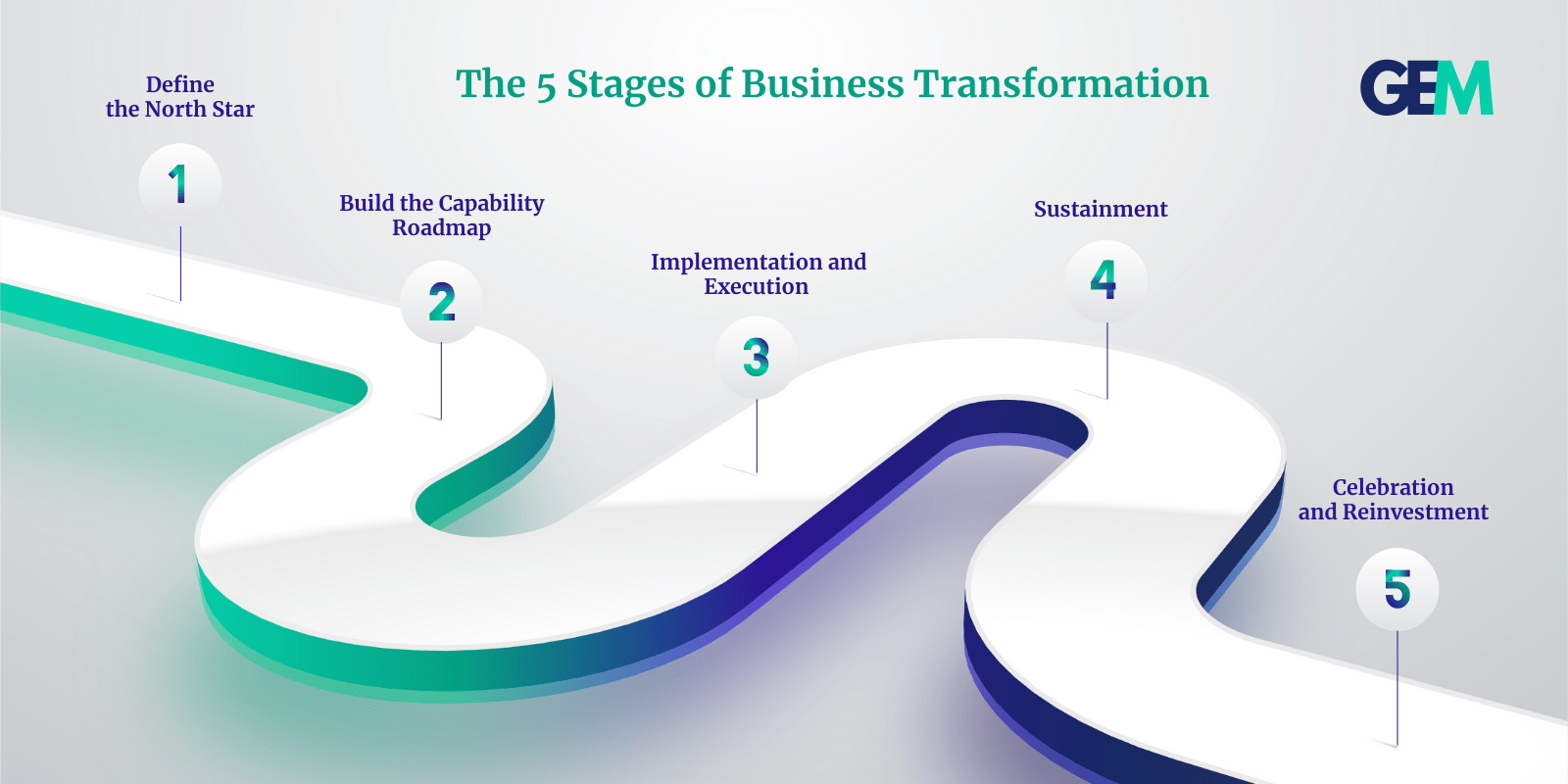
Our research also shows that for transformationto be a successful process and not just a lackluster event, companies must go through five distinct stages, which we will outline below.
What is the First Stage of Business Transformation: Defining the North Star?
The first stage of transformation is to define the North Star — the one metric or goal that will guide all decision-making and drive progress towards the desired future state. This can be a challenge in itself, as it requires leaders to align on what success looks like and then simplify it into a single, quantifiable metric. Once the North Star is defined, everything else falls into place.
What is the First Stage of Business Transformation: Defining the North Star?
The second stage is to build the capability roadmap — a clear plan for how the company will close the gap between its current state and the desired future state defined in Stage 1. This generally requires some combination of process improvements, organizational changes, and technology investments.
What is the First Stage of Business Transformation: Defining the North Star?
The third stage is all about implementation and execution — turning the plan from Stage 2 into reality. This stage can be further broken down into three sub-stages:
- mobilizing the organization around the transformation
- executing against the plan
- course correcting along the way
What is the First Stage of Business Transformation: Defining the North Star?
The fourth stage of transformation is sustainability — ensuring that the gains made during the implementation phase are built into the fabric of the organization so that they can be maintained over time. This generally requires embedding new processes and behaviors into organizational DNA through training, coaching, and reinforced feedback loops.
What is the First Stage of Business Transformation: Defining the North Star?
The fifth and final stage of transformation is celebration and reinvestment — taking a moment to celebrate successes before reinvesting in the next phase of growth. This stage is essential for boosting morale and maintaining a sense of forward momentum within the organization.
Transformation has become an essential part of doing business in today’s world. By following this framework of five stages, companies can optimize their chances for success.

What is the First Stage of Business Transformation: Defining the North Star?
If you are thinking about transforming your business into a global gem, please don’t hesitate to contact us at GlobalEdgeMarkets to gain that global edge! We can evaluate where your business stands today on its transformation journey and what areas to invest in going forward, optimizing your path to success.